Assassin Concept Art: Character Design Ideas
Part of Character Design Gallery: Design Studies and Breakdowns
See the original work
Titan Books
Official art book
by The Art of Assassin's Creed Origins (Paul Davies)
The publisher says it collects hundreds of concept art pieces, sketches, final paintings and 3D renders, with commentary from the artists and developers.
See Official art book on Titan Books (opens in a new tab) ↗Dark Horse Books
Official art book
by The Art of Assassin's Creed Mirage
Oversized hardcover art book on the world of Assassin's Creed Mirage, published by Dark Horse.
See Official art book on Dark Horse Books (opens in a new tab) ↗Assassin concept art has a design problem built in: the character is meant to go unnoticed, but the design has to be memorable. Good assassin artwork solves it with a strong, simple silhouette, a costume that looks practical for climbing and hiding, and one or two signature details the viewer remembers. This guide breaks the archetype into those parts (silhouette, shape language, costume, armor, blades and color) using our own diagrams and two annotated historical objects. For professional assassin concept art, see the official art books linked above; we link to them instead of showing their images.
What makes assassin artwork work
Most memorable assassin designs share three traits:
- A readable silhouette. A peaked hood, a short cape and blades at the hips or wrists say “assassin” from a distance.
- Practical-looking gear. Close-fitting layers, bracers, belts and pouches suggest someone who climbs, runs and hides. Nothing should look like it would snag or rattle.
- A signature. A distinctive blade, a sash color, a mask shape or an emblem gives the character an identity inside an anonymous costume.
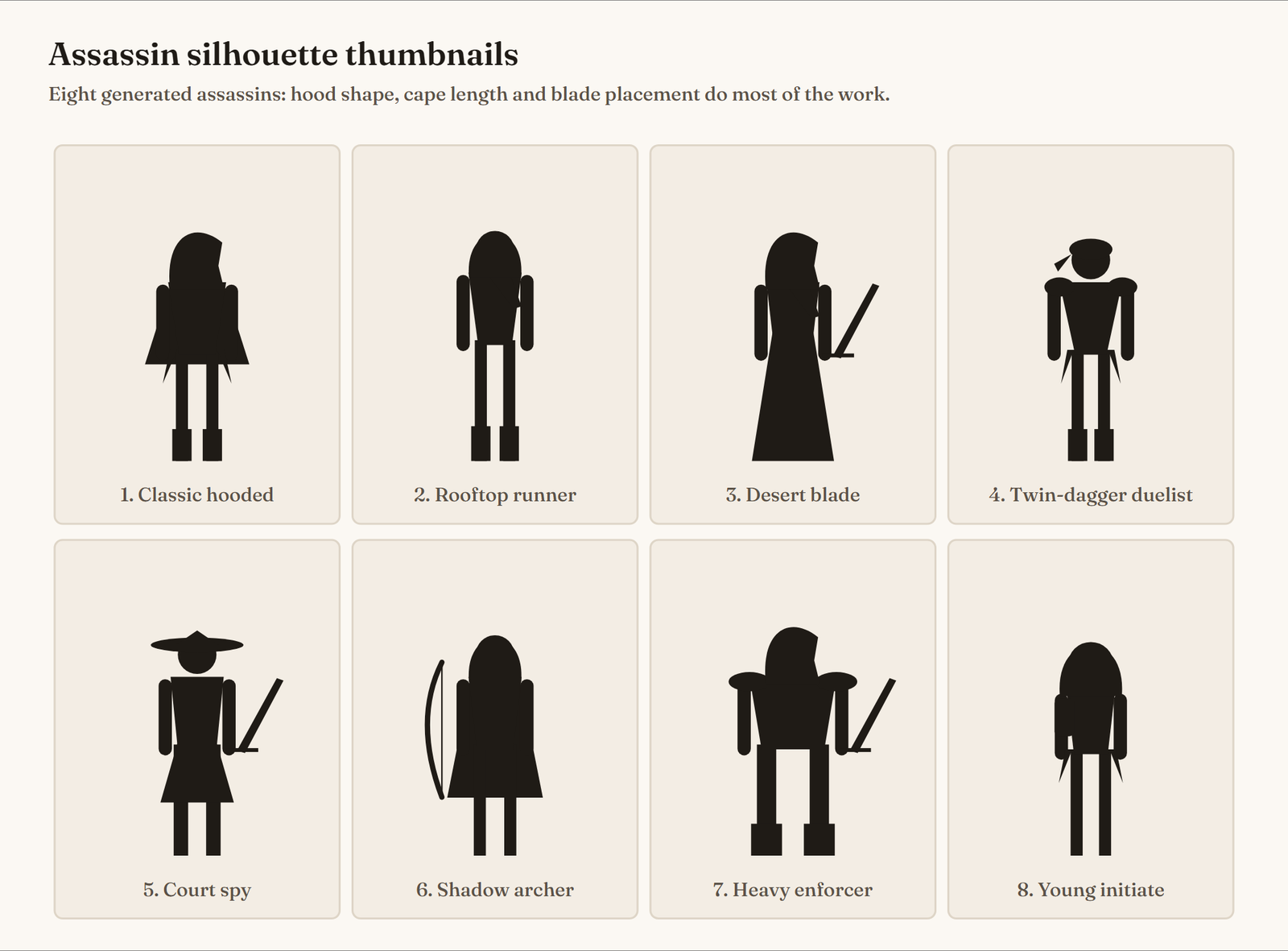
The silhouettes at the top of this page vary only hood shape, cape length, build and weapon placement, yet they read as eight different characters, from a rooftop runner to a heavy enforcer.
Shape language for assassins
Shape language gives the archetype its mood. Our guide to character design basics explains the idea in depth.
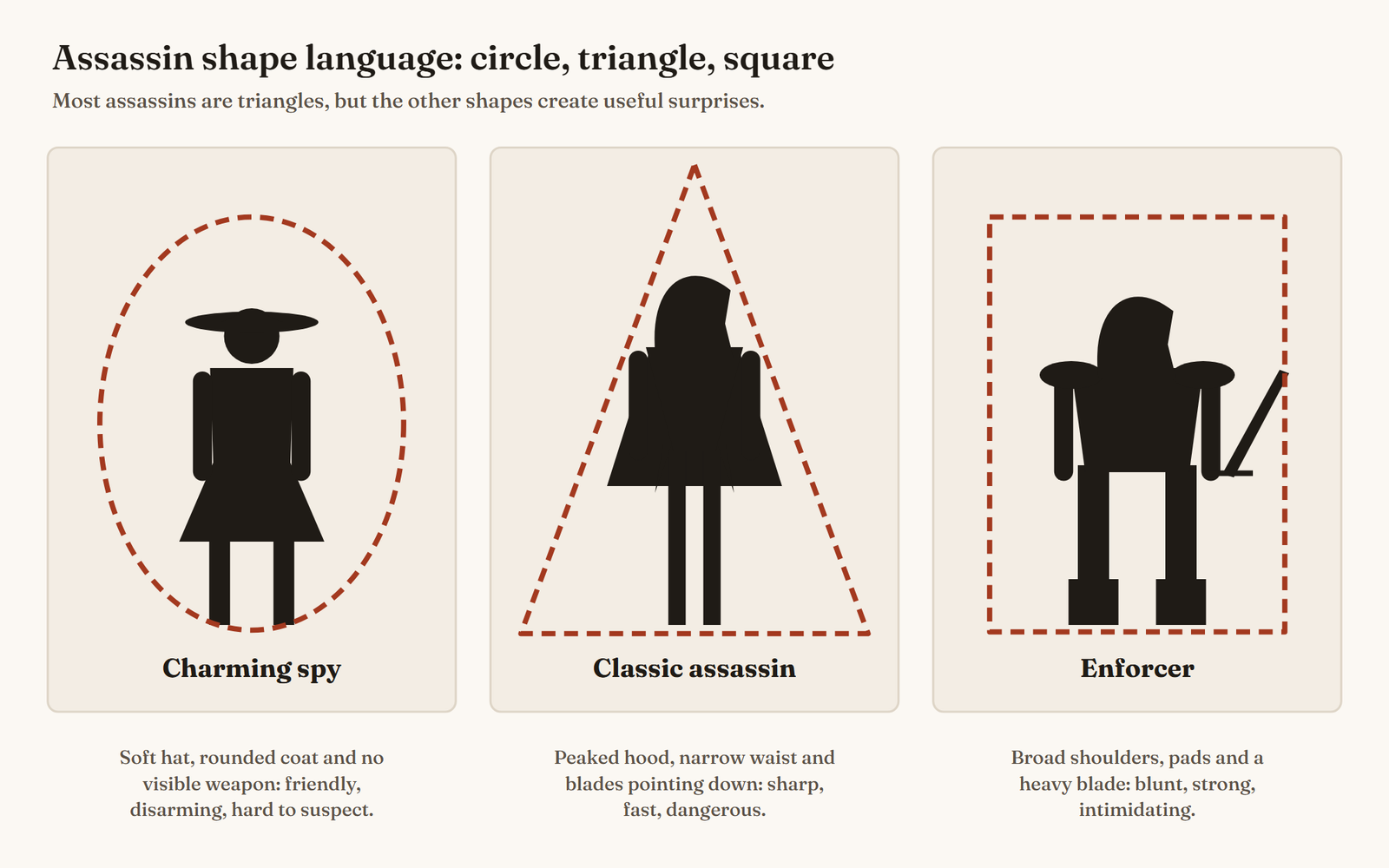
The classic assassin is a triangle: a peaked hood, broad shoulders tapering to a narrow waist, and blades pointing down. A circle-based assassin, with a soft hat, a rounded coat and no visible weapon, is more unsettling because nobody suspects them. A square-based enforcer trades stealth for intimidation.
Blocking in the costume
Block the costume in over a pose, not a neutral stance, because assassins are designed to move. A low crouch shows whether the gear works: hoods that hide the eyes, capes short enough not to drag, and blades that extend the line of the arm.
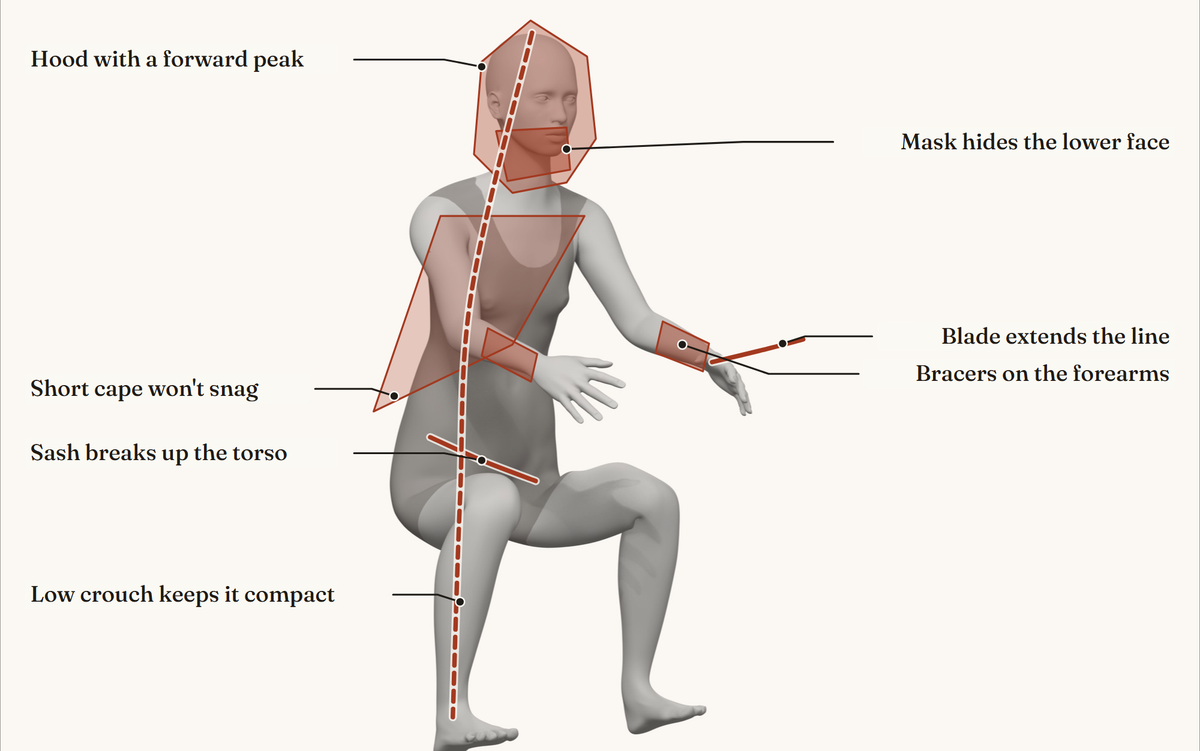
- Hood: a forward peak shades the eyes and creates the archetype’s best-known shape.
- Mask or scarf: hides the lower face and leaves the eyes as the focal point.
- Short cape: keeps the silhouette dramatic without catching on rooftops.
- Bracers: protect the forearms and give you a place for hidden mechanisms or emblems.
- Sash or belt: breaks up the torso and carries the color accent.
Light armor: lessons from history
Assassins rarely wear plate armor. A historical brigandine shows a smarter idea: small steel plates riveted inside a fabric garment, so the armor looks like clothing. This Italian example from about 1540–50, released by The Met as public domain, shows the details.
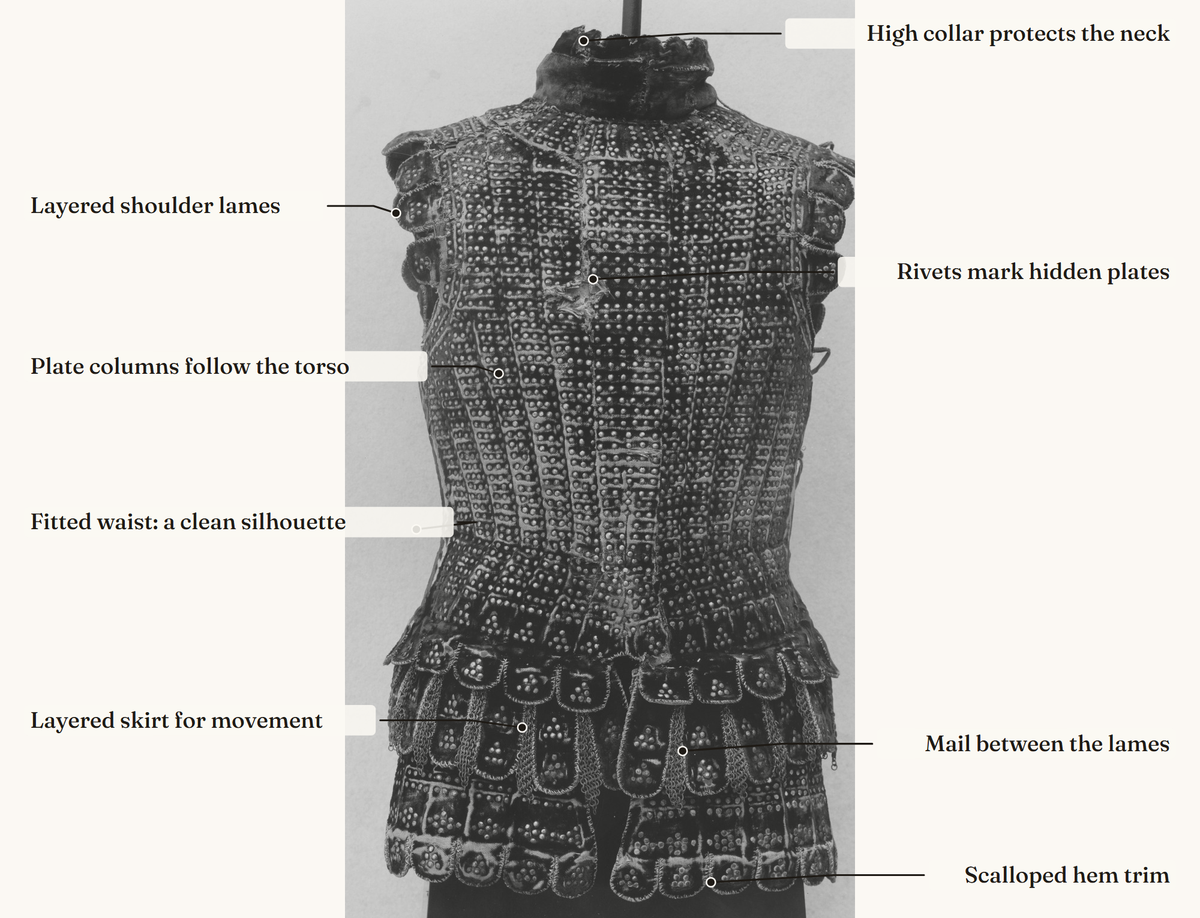
Borrow the logic, not the look: plates that follow the torso in vertical columns, a fitted waist for a clean silhouette, overlapping shoulder pieces and a layered skirt that lets the legs move. The rows of rivets are a great texture for a character who is armored but wants to look unarmored.
Blades as prop design
Weapons are props, and props carry character. This 16th-century dagger and its sheath, also from The Met’s public-domain collection, are a lesson in prop design: a capped pommel that finishes the grip, gold inlay that contrasts with dark steel, a short guard with rounded ends, and metal fittings on the sheath that match the hilt.
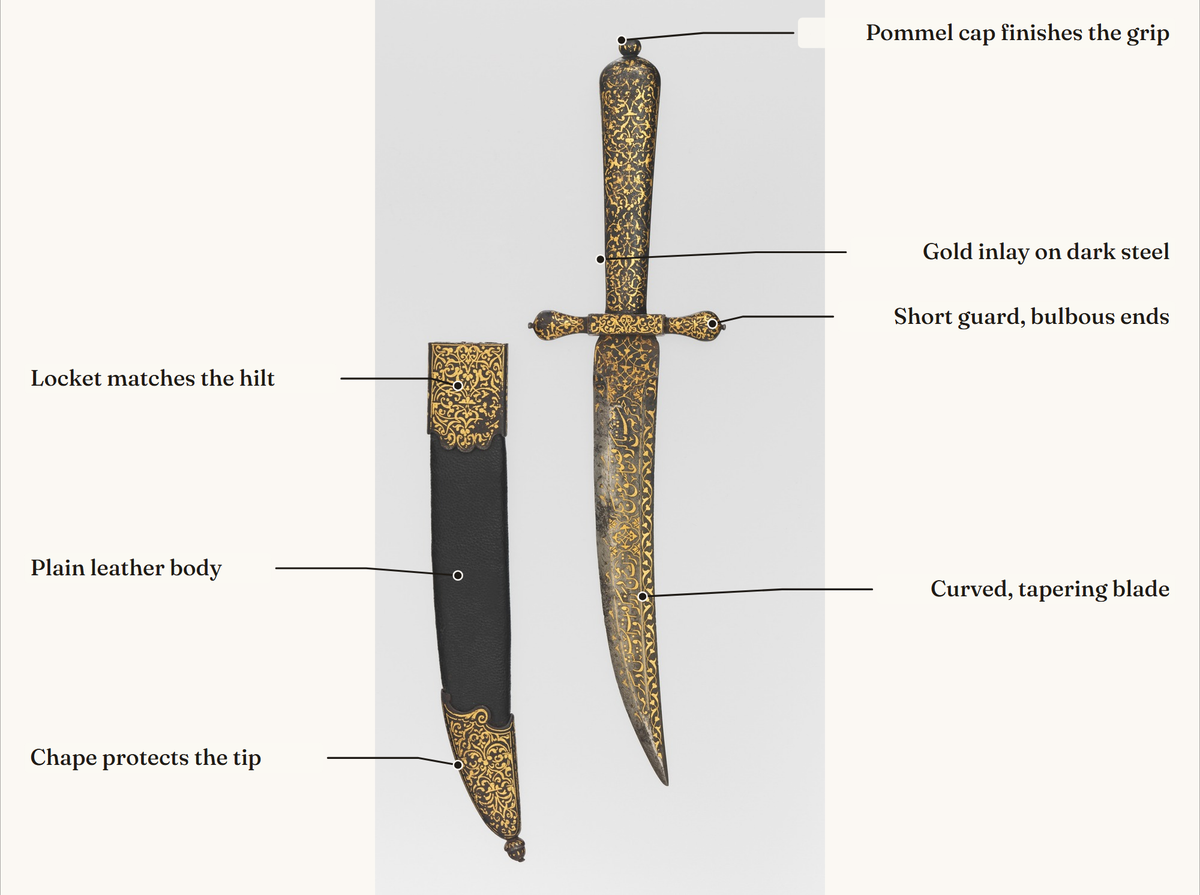
When you design an assassin’s signature blade, design the sheath and the way it’s worn at the same time. Where it sits on the body changes the silhouette, and matching fittings make the set feel like one object with a history.
Color: example assassin palettes
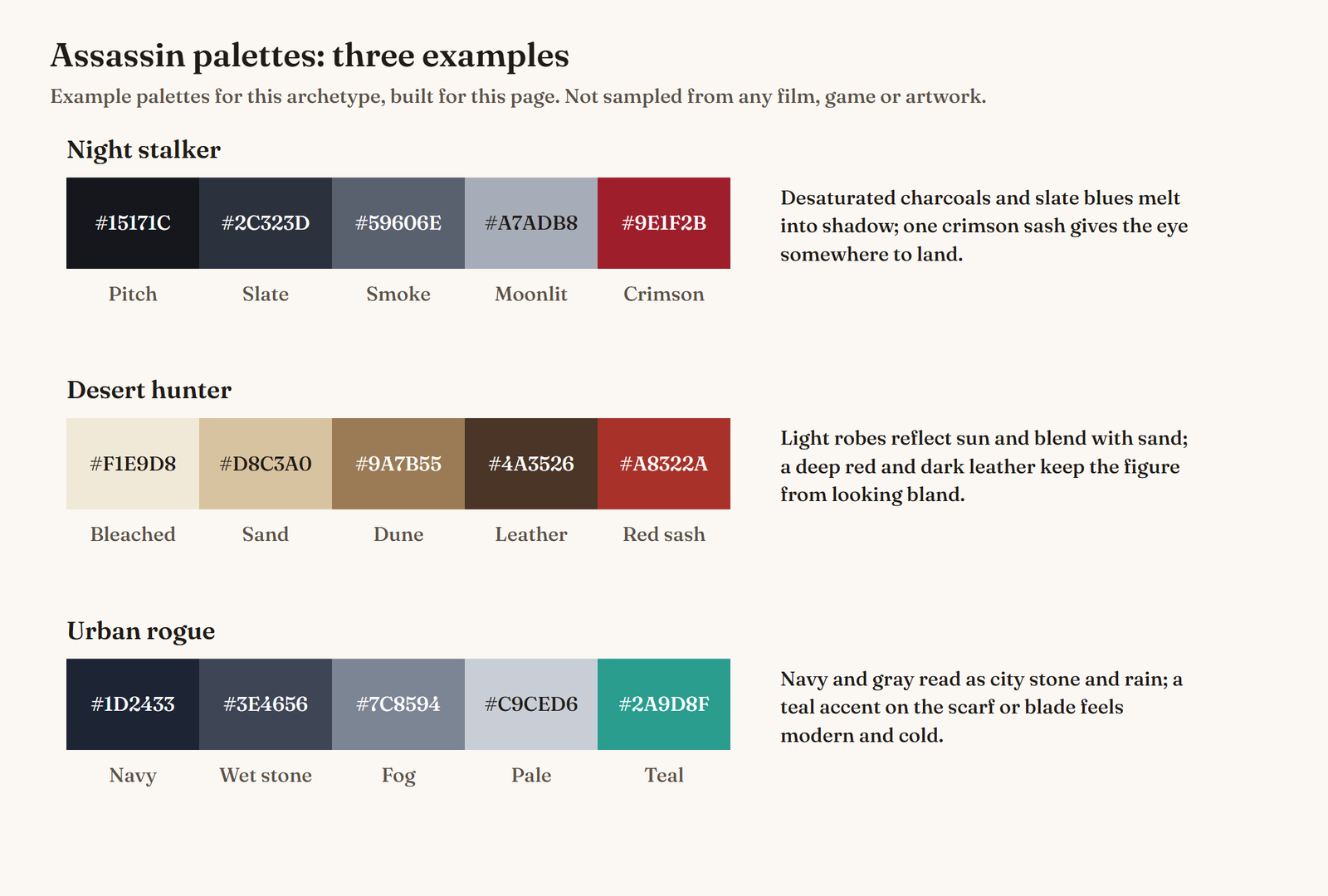
Assassins usually live in desaturated, low-contrast colors that help them blend in. That makes a single accent very powerful: a crimson sash, a red lining inside a pale desert robe, or a teal scarf in a gray city. Decide where the accent goes before you paint anything else.
Designing the hood
The hood is the archetype’s signature shape, so treat it as a design problem of its own. A few variables change the read completely:
- Peak: a sharp forward peak feels predatory; a rounded hood feels monastic or gentle.
- Depth: a deep hood hides the eyes in shadow; a shallow one shows the face and makes the character more human.
- Attachment: a hood sewn to a cape, to a coat or to a separate cowl changes how it moves and how the shoulders read.
- Opening: a straight edge, a pointed edge or a trimmed edge is a great place for a faction pattern.
Draw the head in three views (front, side and three-quarter) before you commit, because hoods that work from the front often collapse into a blob from the side.
Assassin ideas by setting
The setting should shape every piece of gear. A desert assassin needs light, loose layers and a face wrap against sun and sand. A city assassin needs dark, close-fitting clothes, soft boots and grips for climbing. A court assassin may wear no “assassin” costume at all: rich clothing, a hidden blade and perfect manners. A frontier assassin might trade blades for a bow and a hunting cloak. Start from where the character works, and the costume almost designs itself.
Common mistakes in assassin concept art
- Too much gear. Dozens of straps, pouches and blades make a character look cluttered and noisy, the opposite of stealthy.
- All black. Pure black costumes lose all their internal shapes. Use dark grays and blues so folds and layers still read.
- No face, no personality. If the hood and mask hide everything, give the character a signature through posture, gear or color.
- Impractical capes. A floor-length cape looks dramatic in a still pose and absurd on a rooftop. Ask how the costume moves.
From assassin concept art to finished artwork
Assassin concept art explores options: hood shapes, armor solutions, weapon variations and callouts explaining how gear is worn. Finished assassin artwork presents one final design in a polished pose and setting. Most designers work from silhouettes, to a few color roughs, to a clean design sheet, then to an illustration. Our guide to what a concept artist does explains the process, and our design gallery collects more archetype studies.
Design your own
- Design an assassin who hides in plain sight. No hood, no mask, no visible weapon.
- Design an assassin whose armor is hidden under ordinary clothing, like a brigandine under velvet.
- Design a retired assassin. What do they still carry out of habit?
- Design an assassin for a snowy mountain city. How do the hood and cape change?
- Design an assassin and the guard they're avoiding, as a pair with opposite shapes.
- Design a signature blade and sheath that tell you which order the assassin belongs to.
- Draw eight assassin silhouettes using only hood and cape shapes to tell them apart.
- Design a young initiate and their mentor with the same palette and different gear.
- Redesign a classic hooded assassin for a world with steam-powered technology.
- Design an assassin whose color accent appears only on the inside of the cloak.